2026-08-21 · Javier Soto
How To Protect Your Kissimmee Home From Lightning Strikes
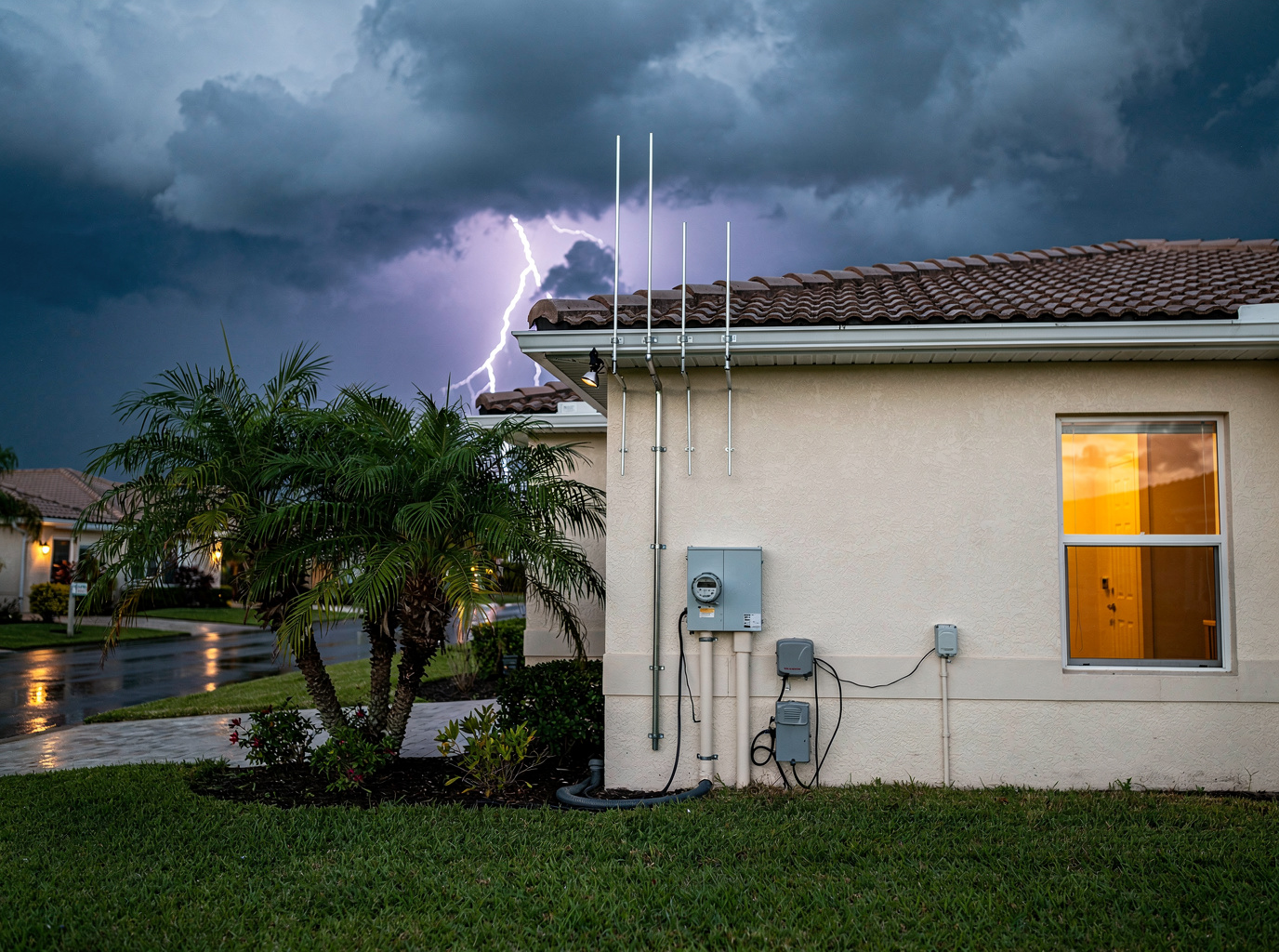
Kissimmee homes in Osceola County face frequent lightning during the humid subtropical summers, so the most effective first step is installing a whole-house surge protector at the main panel combined with verified grounding rods and bonding. This approach handles both direct strikes and the induced surges common when storms roll through from Orlando or St. Cloud.
Lightning Patterns in Osceola County
Central Florida records some of the highest lightning density in the country, with hot, humid air masses building daily storms from May through September. Homes in the Kissimmee Historic District often retain older knob-and-tube or ungrounded wiring that cannot safely divert strike energy, while newer builds in Buenaventura Lakes still need supplemental protection because soil conductivity varies near Lake Tohopekaliga. Mild winters do not reduce risk; a single intense cell can deliver multiple strikes within minutes. Residents near Old Town Kissimmee or Lakefront Park see the same pattern because flat terrain and open water encourage cloud-to-ground activity. Checking local weather data before outdoor work helps, yet permanent electrical upgrades remain the reliable defense.
Whole-House Surge Protection Basics
A whole-house surge protector rated 50,000–100,000 amps installed at the service entrance diverts most transient voltage before it reaches branch circuits. Pair it with point-of-use protectors on sensitive electronics for layered defense. In older Downtown Kissimmee properties, the existing panel may lack adequate bus capacity, requiring an upgrade before the device can be added. Homeowners can inspect their panel label for available breaker spaces and note any signs of overheating during peak summer loads. This step directly supports safe operation when lightning induces voltage on incoming utility lines.
Grounding and Bonding Upgrades
Effective lightning protection requires at least two 8-foot grounding rods bonded to the main panel with 6 AWG copper wire, plus proper bonding of all metal systems including water pipes and HVAC equipment. Many homes built before 1980 in the Kissimmee Historic District still rely on a single rod or water-pipe ground that no longer meets current standards. Adding or replacing rods improves dissipation into the sandy local soil. When rewiring becomes necessary, electricians often discover corroded connections that reduce effectiveness during the rainy season. Whole house rewiring restores reliable paths for strike energy while updating outlets and switches throughout the structure.
Panel Capacity and Inspection Timing
Lightning events often reveal weak points at the main panel, especially in homes where original 100-amp service still serves added loads from modern appliances. An electrical panel upgrade to 200 amps provides headroom for surge devices and future circuits. Schedule inspections before the height of storm season, particularly for properties near Osceola County Stadium that experience frequent power fluctuations. Signs your Kissimmee home needs an electrical panel upgrade include warm breaker handles, flickering lights during storms, or repeated tripped breakers after heavy rain. Addressing these issues prevents cascading failures when a nearby strike occurs.
Outdoor and Seasonal Preparations
Outdoor outlets and landscape lighting around Lakefront Park or Buenaventura Lakes require GFCI protection and weatherproof covers rated for constant humidity. Preparing outdoor outlets and lighting for Kissimmee rainy season outlines steps such as sealing conduit entries and replacing degraded cords that can act as pathways for surge current. Trim trees near service drops to reduce the chance of branches contacting lines during high winds that accompany thunderstorms. These measures complement indoor surge protection and keep the entire system resilient year-round. Electrician Kissimmee Fl remains available Mon–Fri 8am–6pm and Sat 9am–2pm for assessments after any storm event.